Who we are
Strong Support is a UK-based peer support community, founded in 2019, for Muslims navigating questions of sexuality, gender and faith.
Many Muslims experiencing same-sex feelings or questions about gender feel they must choose between their faith and their inner life, and too often face this alone, in silence or shame. We offer a confidential, non-judgemental space to talk openly, make sense of your experiences, and decide for yourself how you want to live.
Our Name
‘Strong Support’ was named after Prophet Lot (as) plea in verse 11:80 of the Quran

Such as Prophet Lot (as) prayed for, we believe the best form for combating same sex lust is with the aid of a strong support.
What we offer
- Peer support groups and one-to-one conversations with people who understand
- Resources on faith, identity, shame, relationships and wellbeing
- Education for families, imams and community leaders on responding with compassion and good adab
Our Approach
We respect each person’s right to set their own direction. Many who come to us want to live in line with traditional Islamic teaching, and we support them in that. Others take different paths, and we respect those choices too and can point you to organisations that support LGBT+ Muslims.
We do not attempt to change anyone’s sexual orientation or gender identity, and we never use pressure, coercion or shame. Our services are for adults aged 18 and over.
Strong Support offers peer support, not therapy. If you’d like professional counselling, we can point you to qualified, registered practitioners.
Our Founder
Strong Support was founded by Sayed Ali Jaffery, a BACP-registered counsellor (MBACP) and Member of the Association of Islamic Mental Health Specialists. Ali holds a Level 4 Diploma in Therapeutic Counselling and co-authored A Snapshot of Therapy Experiences Among Muslims with Same-Sex Attraction (Journal of Human Sexuality, 2025). He speaks English and Urdu.
A word from Ali
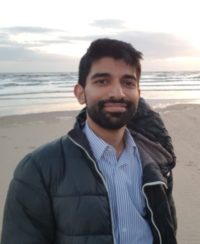
I remember being as young as five when I realised I was different; I wasn’t one of the boys. This lack of belonging, feeling of ‘otherness’ and isolation formed most of my childhood. I was raised up mostly by my dear mother and sisters in a matriarchal family, my dad worked two jobs and was not as involved with our upbringing and I had a considerable age gap between me and my eldest brother. During my school years, I was bullied for being girly. It wasn’t until Year 5 in school when I realised I could use academia as a defence. Therefore, I focused on my studies and education, to build my self-esteem in my peer group. I was around 12 years of age that my feeling of otherness (and conversely feeling so at home with the feminine) with the masculinity was sexualised, I discovered I had same sex attraction. I didn’t tell a soul for 11 years. In those years of silence, I had shame and self-hate that knew no bounds. I questioned everything. I questioned my faith. I questioned my (Kazmi i.e. Prophetic) lineage. I wondered every day why God had challenged me with this – above of other challenges in life. It was easier hiding the reality than facing it.
In this period, we moved as a family from Pakistan to England. I remember seeing this as an opportunity to start anew, a clean slate. However, this move also furthered the feeling of lack of belonging and otherness. I was exposed to pornography online aged 12, which fermented the same sex attraction.
Growing up in a religious household, I had shame of opening up to family and feared the impact it would have on my family’s reputation. There wasn’t any support available. As a community we are good in pointing out whats halaal (lawful) and haram (unlawful), but there aren’t much practical solutions available – at least for people like me. It wasn’t until I was 23, when I was approaching depression that I then started speaking and getting help. I could only find a Muslim yahoo group and nothing else. The Christian community was miles ahead with many support organisations for people with same sex attraction. It was in 2013 when I attended Journey into Manhood experiential weekend by Brothers Road that my life changed and I was able to see a way out.
I worked every week for a couple of years after the weekend with a life coach on myself and the false stories and beliefs I had. Alhamdulillah, fast forward to events in 2019, I found someone unique, who accepted me with all this and decided to marry me and broke down my fear of my never finding a woman I would love. The silence in the Muslim community is deafening on a lot of topics. I believe in the concept of “wajib al kifayi” – if no one is doing it in the community, then it becomes wajib (obligatory) on the person that is able to do something. It is for this reason and from my own personal struggle, that I am delighted to start Strong Support, which is a peer support organisation for Muslims with sexual and gender identity issues.